
What Does EV Charger Installation Cost in Houston?
EV charger installation cost in Houston depends on the charger, how far the wire has to run from your panel to the garage or driveway, whether your panel has room, and the permit. Wired gives a written estimate after we see the setup, and the estimate is free.
Request a quote.
Quick facts
- Cost depends on: The charger and its amperage, how far the charger is from your panel, what your panel can handle, where the charger mounts, and the permit.
- Price: Set after we see your panel and the spot where the charger will go. The estimate is free.
- Tesla Wall Connector: The same kind of wiring job as other Level 2 chargers; the amperage and the distance from the panel change the cost, not the badge on the car.
- Permit: A new circuit for a charger is permitted and inspected in most Houston-area cities; we handle the permit and the inspection.
- Panel: We check your panel's capacity before we quote the charger.
- Who and how to book: Wired Electrical & Generators, licensed electricians based in Tomball. Call (713) 467-1125, answered 24/7.
What Drives EV Charger Installation Cost in Houston
People search for one number for EV charger installation, but the cost is built from a few parts, and each one changes from house to house. That is why we price it after we see your panel and the spot where the charger will go, and why the estimate is free. This applies to Tesla Wall Connector installation and every other Level 2 charger.
The charger and its amperage
A Level 2 charger comes in different power levels. A higher amperage charges faster, but it needs a bigger breaker and heavier wire. A plug-in unit on a 240 volt outlet and a hardwired unit are priced differently too. We help you pick the level that fits how you drive, not the biggest one on the shelf.
How far the charger is from your panel
The wire run is often the biggest variable. A charger on the wall right beside the panel is a short, simple run. A charger at the far end of a long garage, on the other side of the house or in a detached building needs more wire, more conduit and more labor.
What your panel can handle
A charger is a large, steady load. We check the panel size, the open breaker spaces and the total load on the house. If the panel has room, the job stays simple. If it does not, we explain the options, which can include a panel upgrade.
Where the charger mounts
An interior garage wall is the easiest. Brick, stucco, an outdoor wall, a driveway post or a detached garage can add work such as weatherproof conduit, boring through masonry or trenching. We look at the real spot before we quote it.
Permit and inspection
A new 240 volt circuit for a charger is permitted work in most Houston-area cities. We pull the permit and meet the inspector so the install is done to code, and your insurance and any resale paperwork stay clean.
How to read an EV charger estimate
Think of the job in three parts: the power source, the path the power takes, and the equipment at the end. A good estimate explains each one in writing.
The power source: your panel
A charger can run for hours, often in the evening, when the AC, the oven and the dryer are on too. That overlap is what the panel check is about. If the panel is tight, the answer may be a lower charger setting, a load management device or a panel upgrade. See whether you need a 200 amp panel.
The path: the wire run
Finished walls, attic crossings, slab floors and outdoor runs each change the labor. A detached garage may need a trench. A second charger for a second car changes the plan again, because two chargers on one service need a decision about capacity or load sharing.
The equipment: charger and connection
A plug-in charger uses a 240 volt receptacle. A hardwired charger connects straight to its circuit, and some higher-power chargers are hardwired only. We size the charger to what your car can accept and what your service can safely deliver. See hardwired vs plug-in.
Load management and surge protection
A load management device lowers the charging rate while other big loads run, and it can sometimes avoid a larger service. It adds a part to the job. A whole-home surge protector at the panel is optional and can be added while we are there. We tell you plainly whether either one fits your home.
To get a quote faster, take a photo of your panel with the door open (do not remove the cover), note where you want the charger, and tell us what car you drive or plan to buy. If you also plan a generator or a bigger air conditioner, say so, since they share the same service. Call (713) 467-1125.
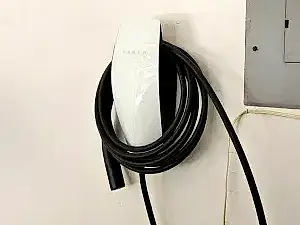
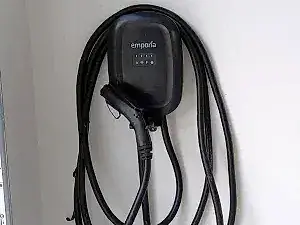
EV chargers on the wall.
Level 2 chargers from recent installs.
Ask us anything. These come up most.
How much does it cost to install a Level 2 EV charger in Houston?
It depends on the charger, how far the wire has to run from your panel to the garage or driveway, whether your panel has room, and the permit. Two homes with the same charger can come out very different, so we give a written estimate after we see the setup. The estimate is free.
Does my panel need an upgrade for an EV charger?
Not always. A Level 2 charger needs its own breaker and a safe amount of spare capacity. If the panel is full or already near its limit, an upgrade or a load-management device may be needed. We check this first, before we quote the charger.
Is Tesla Wall Connector installation different from other chargers?
The wiring job is the same kind of work: a dedicated circuit sized for the charger, the right breaker and wire, and a clean mount. What changes the cost is the amperage you want and the distance from the panel, not the badge on the car.
Do I need a permit to install an EV charger?
In most Houston-area cities, yes. A new circuit for a charger is permitted and inspected, and we handle the permit and the inspection for you.
Can you install a charger in a detached garage or on a driveway wall?
Yes. These jobs usually need a longer wire run, and sometimes conduit or a trench, which is why they are priced after a visit.
Can I install an EV charger myself?
A 240 volt circuit is not a do-it-yourself job. Mistakes in wire size or connections can overheat and cause a fire, and permit rules apply. Use a licensed electrician.
Is a faster charger always better?
Not always. Your car's maximum charging rate and your home's electrical capacity both limit what you can use, so we size the charger to fit both.
Does a NACS or J1772 plug change the cost?
No. The home circuit is a dedicated 240 volt circuit sized for the charger. The connector is part of the charger and your car, not the wiring. See J1772 vs NACS.
Are there rebates or tax credits for a home charger?
Programs change often and differ by utility and by year, so we do not quote them. Ask your electric utility and a tax professional what applies to you. We provide a written estimate and invoice you can show them.
From first call to finished job.
Estimates are free. Call any time, day or night.