
Portable vs. Standby Generators
A portable generator costs less up front and runs a few things through cords or a transfer switch. A standby generator is installed for good, runs on natural gas or propane, and starts on its own within seconds of an outage.
Generac Prestige DealerGenerac's highest dealer designation. We sell, install and service Generac home standby generators.
Generac generatorsWhen it comes to keeping your home or business powered during an outage, choosing the right generator is crucial. With the variety of options available, the decision often comes down to two popular types: portable generators and standby generators.
Each has its own set of advantages and disadvantages, and understanding these can help you make an informed choice. In this blog, we’ll explore the key factors to help you decide which one is the best fit for your needs.
Which Generator is Right for You?
Consider Your Power Needs:
- If you only need to power a few essential appliances or devices during an outage, a portable generator may be sufficient. However, if you want to ensure your entire home or business remains powered, a standby generator is the better choice.
Think About Your Budget:
- Portable generators are more affordable upfront, but they come with ongoing fuel costs and may require more frequent maintenance. Standby generators have a higher initial cost but offer long-term reliability and convenience.
Assess Your Usage:
- If you need a generator for occasional use, such as during camping trips or short-term outages, a portable generator is a practical option. For those who live in areas prone to frequent or prolonged power outages, a standby generator provides a more dependable solution.
Evaluate Installation and Maintenance:
- Portable generators require minimal installation and can be set up quickly in an emergency. Standby generators require professional installation and regular maintenance, but they offer the advantage of automatic operation.
Ultimately, the choice between a portable generator and a standby generator depends on your specific needs, budget, and preferences. Portable generators offer flexibility and affordability, making them ideal for temporary or occasional use. Standby generators, on the other hand, provide a reliable, long-term solution for those who want uninterrupted power during an outage. By carefully considering the factors outlined above, you can make an informed decision and ensure that your home or business stays powered, no matter what.
One safety note: never plug a portable generator into a wall outlet. It can backfeed the utility lines and endanger line workers. Use a transfer switch or interlock installed by a licensed electrician. If you’re still unsure which generator is right for you, our team is here to help. Call (713) 467-1125 for personalized advice.
Visit our showroom: 13910 Alice Road Tomball, Texas 77377
Side by side
- Starting. A standby unit senses the outage and starts by itself, whether you are home or away. With a portable, someone rolls it out, starts it and plugs it in.
- Fuel. A standby runs on natural gas or propane, so there is no refueling. Portables run on gasoline or propane, and tri-fuel models can also hook to your natural gas line. Gas stations often run dry around a big storm.
- What it runs. A portable can usually carry the refrigerator, freezer, some lights, phone chargers, internet and fans. Central AC is often beyond it. A standby sized for your house can run the AC along with everything else.
- Safety. A portable must run outdoors, away from doors, windows and vents, and never in a garage, because its exhaust contains carbon monoxide. A standby is installed outdoors at code-required clearances.
- Hookup. A portable connects through an outdoor inlet and a manual transfer switch or a listed interlock. A standby uses an automatic transfer switch. Both are permitted, inspected work.
- Upkeep. A standby needs scheduled service and runs a short self-test every week. A portable needs fuel on hand, and you should test it before a storm.
Where Wired fits
We sell both. Our Tomball showroom carries DuroMax portables, from a 2,300-watt inverter you can carry to a 28,000-watt unit that can run a whole house through a transfer switch. We install the inlet and the switch, so a portable powers the house without a cord through a window. We also sell, install and service Generac home standby generators as a Generac Prestige Dealer.
See portable generators, transfer switches and interlocks, or standby generator installation. If you are weighing the cost of a standby, read whether a whole house generator is worth it in Houston.
Quick answers.
Can a portable generator run my whole house?
A large one can carry a lot of a house through a transfer switch, but most people use a portable for the essentials. Central AC is often beyond it. Before we install the hookup, we look at the generator's rating and the loads you care about.
Can I plug a portable generator into a wall or dryer outlet?
No. That back-feeds the house and the utility lines and can kill a line worker. Use an outdoor inlet with a manual transfer switch or a listed interlock, installed by a licensed electrician.
Is a standby generator worth the extra cost?
It depends on how long your outages last and what has to keep running. Our guide to whether a whole house generator is worth it in Houston walks through it, and the estimate is free.
Do you sell portable generators?
Yes. We carry DuroMax portables at our showroom at 13910 Alice Road in Tomball, and we can install a transfer switch or interlock so one powers the house safely.
Real generator work.
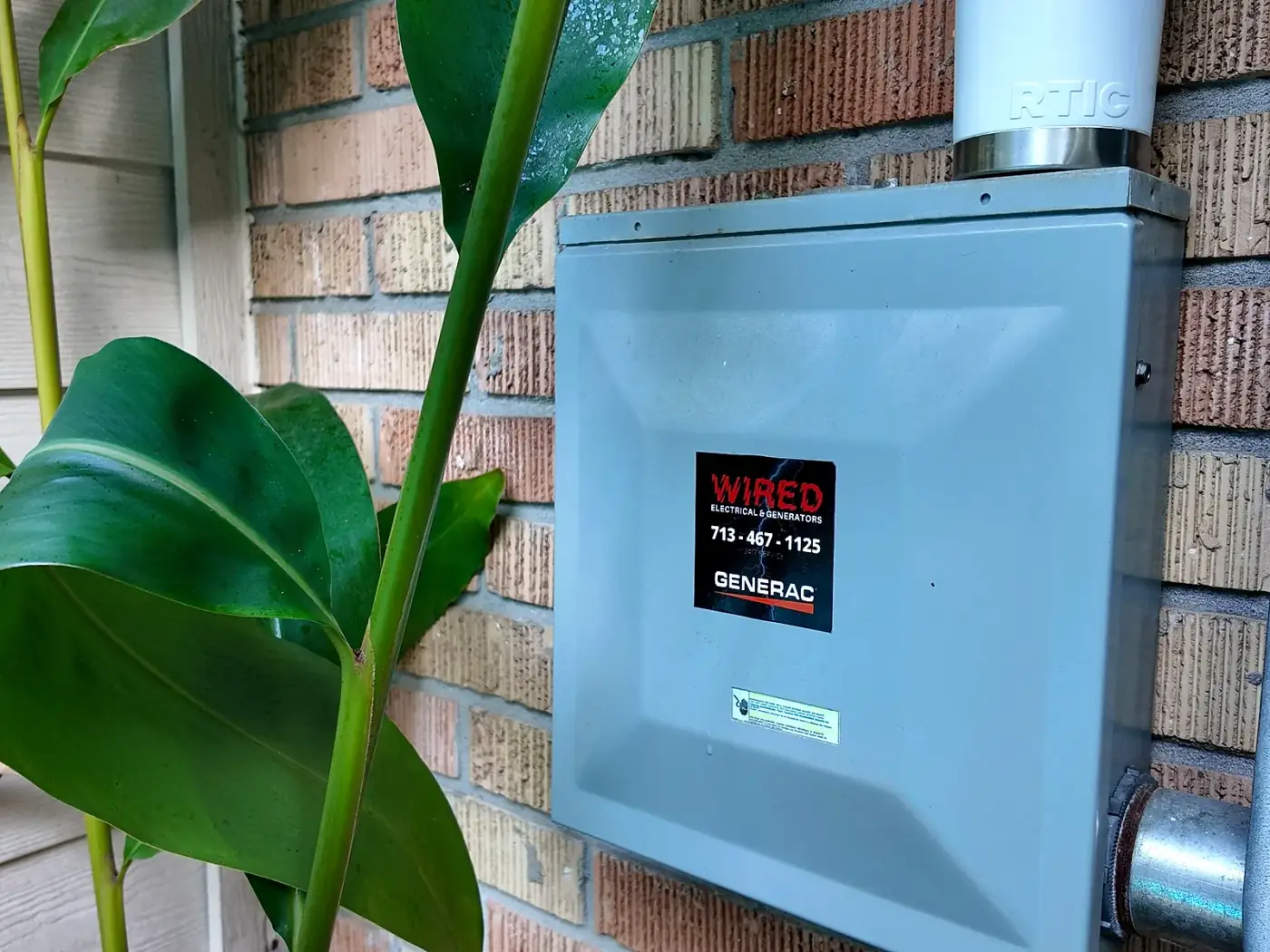
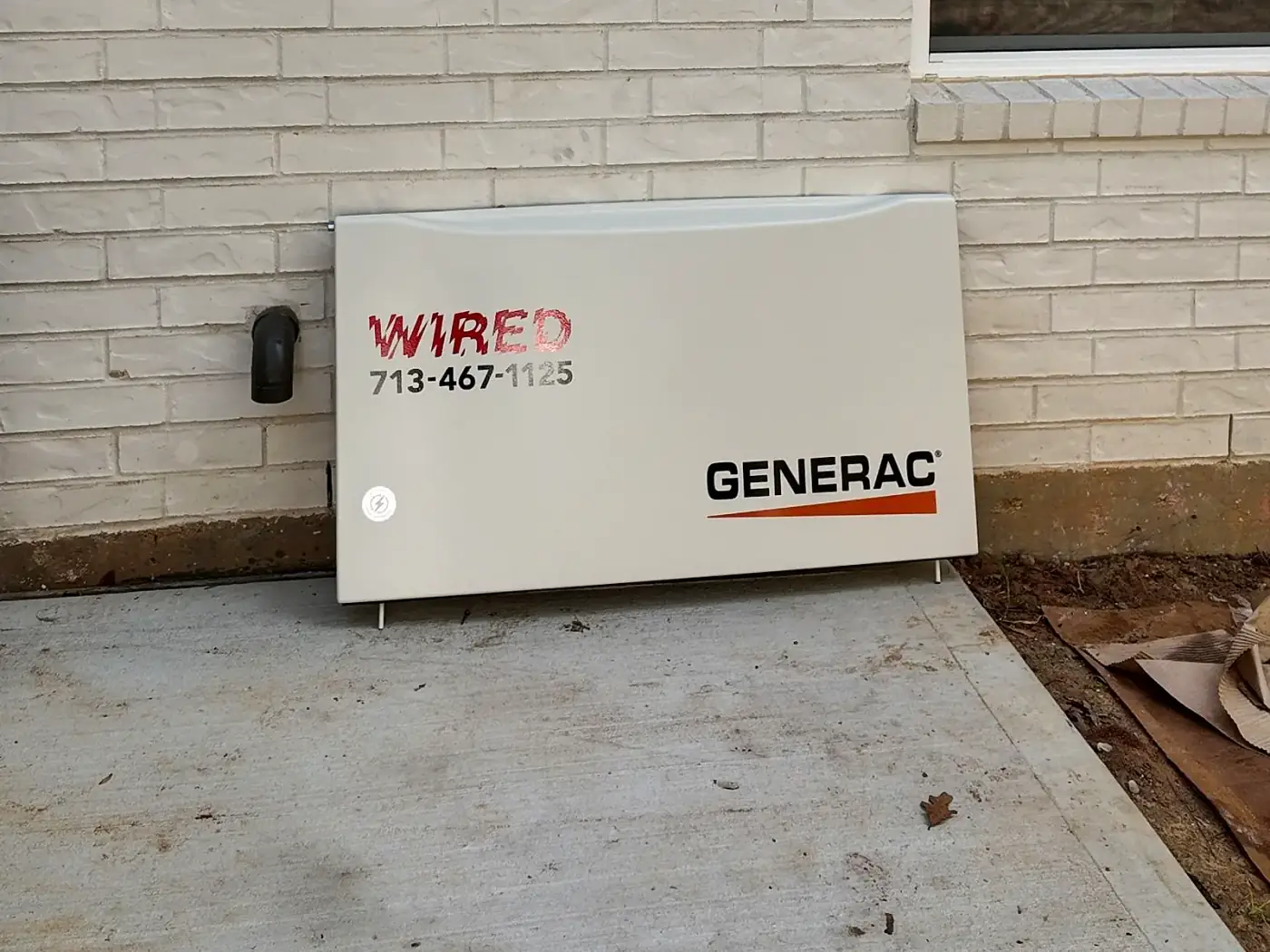
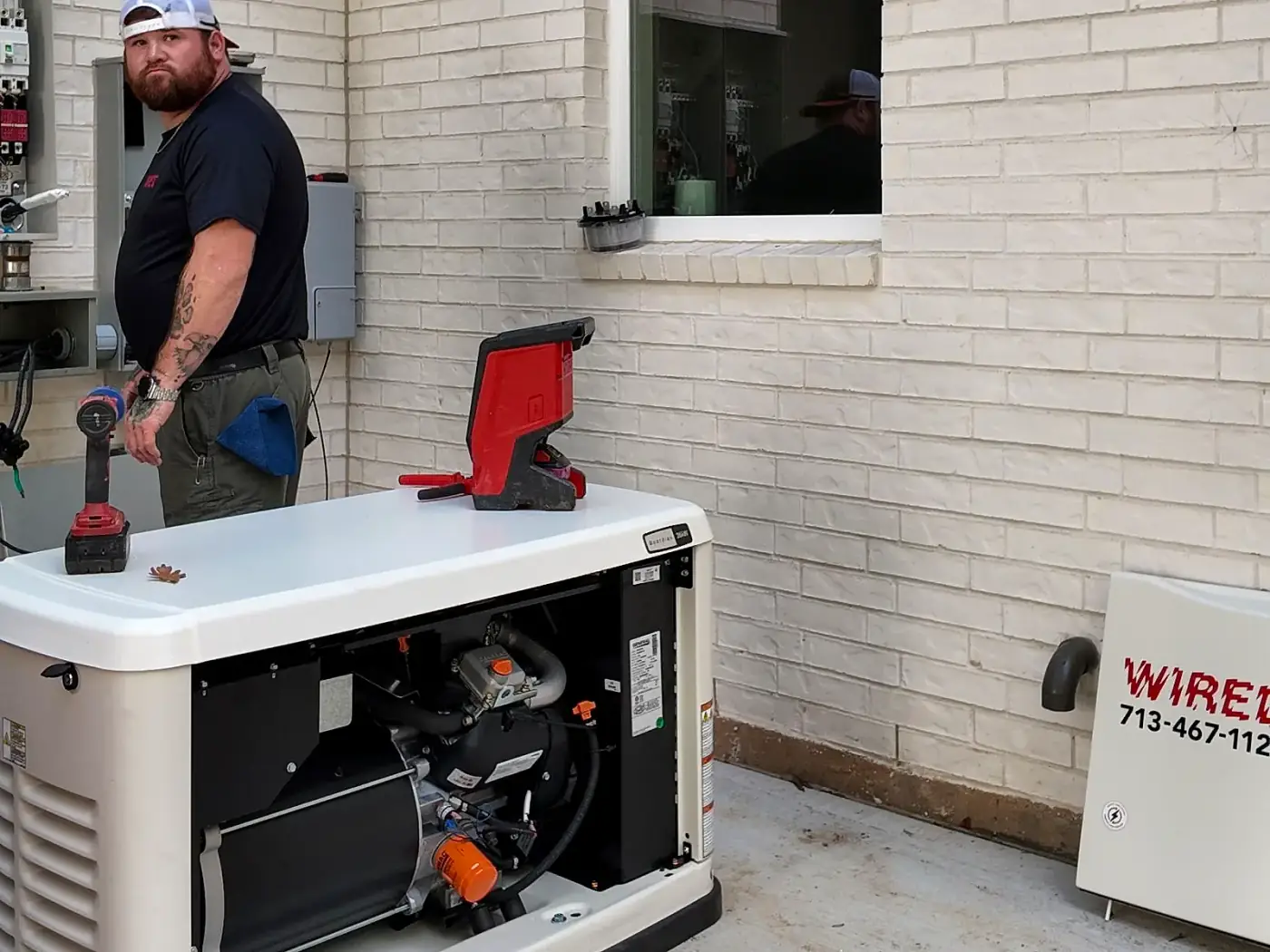
Photos from Generac installs and service by our own crew.
Questions about any of this?
Call. Call any time.