
House Rewiring in Houston. Rewire a house the safe way.
Old wiring is the quiet risk in an older house. We find it, tell you what is there, and replace what needs replacing.
When a house needs rewiring.
It is not always the whole house. We tell you which part is worth doing.
- Cloth-covered or brittle wiring, ungrounded outlets, or aluminum branch wiring.
- Breakers that trip, outlets that scorch, lights that dim when the AC starts.
- A remodel that opens the walls anyway.
- Insurance or inspection findings on the electrical.
- Permit and inspection handled by us.
From first call to finished job.
- Free inspection. We test and open what we can without making a mess.
- A plan and a quote. Which circuits, in what order, and how long the power is off.
- We rewire. Room by room if you want to stay in the house.
Signs Your House Needs Rewiring
Old wiring rarely fails all at once. It gives small signs first, and some of them only show up on an inspection report.
Warning signs you can notice around the house
Lights that flicker or dim when the AC or a big appliance starts, outlets or switch plates that feel warm, a faint burning smell and breakers that trip again and again are all worth a call. So are outlets that no longer hold a plug tightly and scorch marks around a cover plate. One sign alone may point to a single bad circuit. Several together, in an older house, often point to the wiring itself.
Two-prong outlets and missing grounds
Two-prong outlets usually mean the circuit has no ground wire. That matters for surge protection, for three-prong appliances and for safety if something inside a device fails. Swapping in a three-prong outlet without a ground does not fix it, and it hides the problem from the next person. We test what is actually there and tell you whether grounding can be added to those circuits or whether they are better replaced.
When an inspector or insurer flags the wiring
Many rewiring jobs start with a home inspection report or a question from an insurance company. The report may mention knob and tube, aluminum branch wiring, ungrounded circuits or past do-it-yourself work. Insurers each have their own rules, so check with your insurer about what they need from you. We can look at what was flagged, explain it in plain English and give you a written plan you can share.
Should you rewire your house if nothing seems wrong?
Not every older house needs a full rewire. If the wiring is in good condition and the house is not asking more of it than it can handle, targeted repairs may be enough. The answer changes when you plan a remodel, add an EV charger or a generator, or keep finding problems on the same circuits. An inspection is how you find out, and we tell you when rewiring is not the answer.
Knob and Tube, Aluminum Wiring and Cloth-Covered Wire
Houston has homes from many building eras, and each era left its own kind of wiring behind. Each one needs a different plan.
Knob and tube wiring
Knob and tube is the oldest wiring you are likely to find, with single wires run on ceramic knobs and through ceramic tubes. It has no ground, the insulation gets brittle with age, and it was never meant to be buried in attic insulation. It has often been spliced into over the years, too. It is less common around Houston than in older cities, but we still find it in some older homes and additions, and we generally recommend replacing it.
Aluminum branch wiring
Some homes were built with aluminum wire on the everyday outlet and light circuits. Aluminum expands and contracts more than copper, and connections at outlets, switches and splices can loosen and overheat over time. The usual options are replacing those circuits with copper or repairing the connections with methods rated for joining aluminum to copper. Large aluminum service and feeder wires are a different matter and are common, so we check which kind you have.
Cloth-covered and brittle wiring
Many older houses have cloth-covered cable. The cloth jacket and the rubber under it can crack and crumble, especially in a hot Houston attic, leaving bare copper close together. Where we can see it, we check the insulation at fixtures, outlets, junction boxes and the panel. Brittle wiring is usually replaced circuit by circuit rather than patched, because the damage you can see is rarely the only damage.
Mixed wiring from past remodels
A lot of older homes have wiring from several decades joined together in the attic or behind outlets. Some of it is fine. Some of it was added without a permit, with splices outside of boxes or wire that is too small for its breaker. We trace what we can, tell you which circuits are a concern and build the plan around those first.
Whole House Rewiring or Rewiring in Stages
Rewiring a house does not always mean every wire at once. The right scope depends on what is there, your budget and your plans for the house.
Whole house rewiring
A whole house rewire replaces the branch circuits throughout the home, usually along with the outlets, switches and boxes, and often the panel too. It makes sense when the original wiring is unsafe throughout, such as knob and tube or crumbling cloth wiring, or when the house is empty or being remodeled. When it is done, you have one wiring system you can trust instead of several decades stitched together.
Can you rewire a house in stages?
Yes, and many homeowners do. We put the worst circuits first, such as the kitchen, the bedrooms or anything flagged on an inspection, and plan the rest for later. Staging spreads out the work and the cost. The plan should still be laid out as one job from the start, so circuits and the panel are sized for the finished house and nothing has to be redone.
Rewiring during a remodel
A kitchen or bathroom remodel, an addition or new drywall is the easiest time to rewire. With the walls open, new wire goes in quickly and you avoid patching later. It is also the right time to add circuits for the way you use the room now, such as a dedicated appliance circuit or more counter outlets. Ask your contractor to bring us in early, before the walls close.
Adding circuits while the walls are open
Older homes were wired for fewer appliances. During a rewire we can plan dedicated circuits for a microwave, a garage freezer, a home office or a workshop, plus GFCI and arc fault protection where code calls for it. If a panel upgrade, an EV charger or a standby generator is in your future, we plan for it now so it does not mean opening the walls twice.
What Happens When You Rewire a House
Most people worry about the mess and about living without power. Here is how the job usually goes.
Inspection and a written plan
It starts with a free visit. We look at the panel, test circuits, open a sample of outlets and switches and check the attic where we can reach it. Then you get a written estimate that lists which circuits we replace, in what order and when the power will be off. If we find something during the work that changes the plan, we stop and talk to you before going further.
Can you rewire a house without removing drywall?
Usually most of it, yes. We fish new wire through the walls from the attic, and from a crawl space where a house has one, and we use the existing outlet and switch openings wherever we can. Some small access holes are normally needed, often where a wall meets the ceiling or behind fixtures. We keep the openings as small as we can and tell you ahead of time where they will be.
Living in the house during rewiring
Most families stay home. We work room by room or circuit by circuit, shut off only what we are working on and aim to have each area back on at the end of the day. We tell you in advance when the whole house needs to be off, such as during a panel change. Tell us about medical equipment, a home office or pets when you call.
Permit, final inspection and cleanup
Rewiring is permitted work. We pull the permit under our license, schedule the inspection and meet the inspector. When the work passes, we test the circuits, label the panel and clean up. We tell you before we start how wall patching and painting will be handled, so there are no surprises at the end. You also get a panel directory that matches the new circuits, which makes the next repair simpler.
House Rewiring Cost: What Drives the Price
We do not post a price for rewiring a house, because two houses of the same size can be very different jobs. These are the things that move the number.
Size, layout and access
More rooms and more circuits mean more wire and more hours. Access matters as much as size. An open attic above a single-story house is simpler than a two-story home with a finished upstairs, a slab with no crawl space or walls that are hard to fish through. Vaulted ceilings, tight attics and finished garages all change how long it takes to get wire where it needs to go.
How much of the wiring has to go
Replacing a handful of aluminum or cloth-covered circuits is a much smaller job than replacing everything. Knob and tube usually means replacing all of it, while some newer wiring in the same house can often stay. What we find on the inspection decides the scope, and the scope decides most of the cost. We show you what we found, so you can see why each circuit is on the list and decide what to do first.
Panel, service and added circuits
If the panel is outdated or full, a rewire is often paired with a panel replacement or a service upgrade. Adding dedicated circuits, outdoor outlets, hardwired smoke alarms or whole house surge protection adds to the job, but it is simpler to do while we are already in the walls. Permit fees, the inspection and any patching also go into the total.
Getting a full house rewire quote
Every house is different, so a free visit gets you a written estimate. It lists the circuits, any panel work, the permit and how the job will be staged. You can use it to plan, to compare options or to share with a buyer, a seller or your insurer. Call (713) 467-1125 to set up the visit. There is no pressure to decide on the spot.
Choosing a House Rewiring Electrician
A rewire touches every room in the house. Who does it matters as much as what goes in the walls.
Can you rewire your house yourself?
We do not recommend it. Rewiring means working on every circuit, connecting at the panel, matching wire size to breakers and meeting code throughout, and mistakes stay hidden in the walls until they cause a problem. It also needs a permit and an inspection. Unpermitted wiring can come back to you when you sell the house or file an insurance claim. This is a job for a licensed electrician.
What to ask any rewiring contractor
Ask whether the work is permitted and inspected, who pulls the permit and whether the people working in your walls are licensed electricians. Ask for a written scope that lists what is replaced and what stays, when the power will be off and how patching is handled. Clear answers to those questions tell you a lot about how the job will go.
Why Houston homeowners call Wired
We are a licensed electrical contractor with a showroom in Tomball, working across the Houston area. Our phones are open 24/7, the estimate visit is free and we handle the permit and inspection. Because we also do panels, surge protection and Generac standby generators as a Prestige Dealer, we can plan your rewire around everything else the house will need.
House rewiring cost and what drives it
We do not publish a price because it would not fit your house.
Size and access
Open attics and crawl spaces make rewiring simpler. Finished walls take more care.
What is there now
Cloth, aluminum and knob-and-tube each need a different plan.
What else is changing
If you are adding a panel upgrade, a generator or a remodel, doing it together saves a visit. See panel upgrades.
The other jobs we get called for.
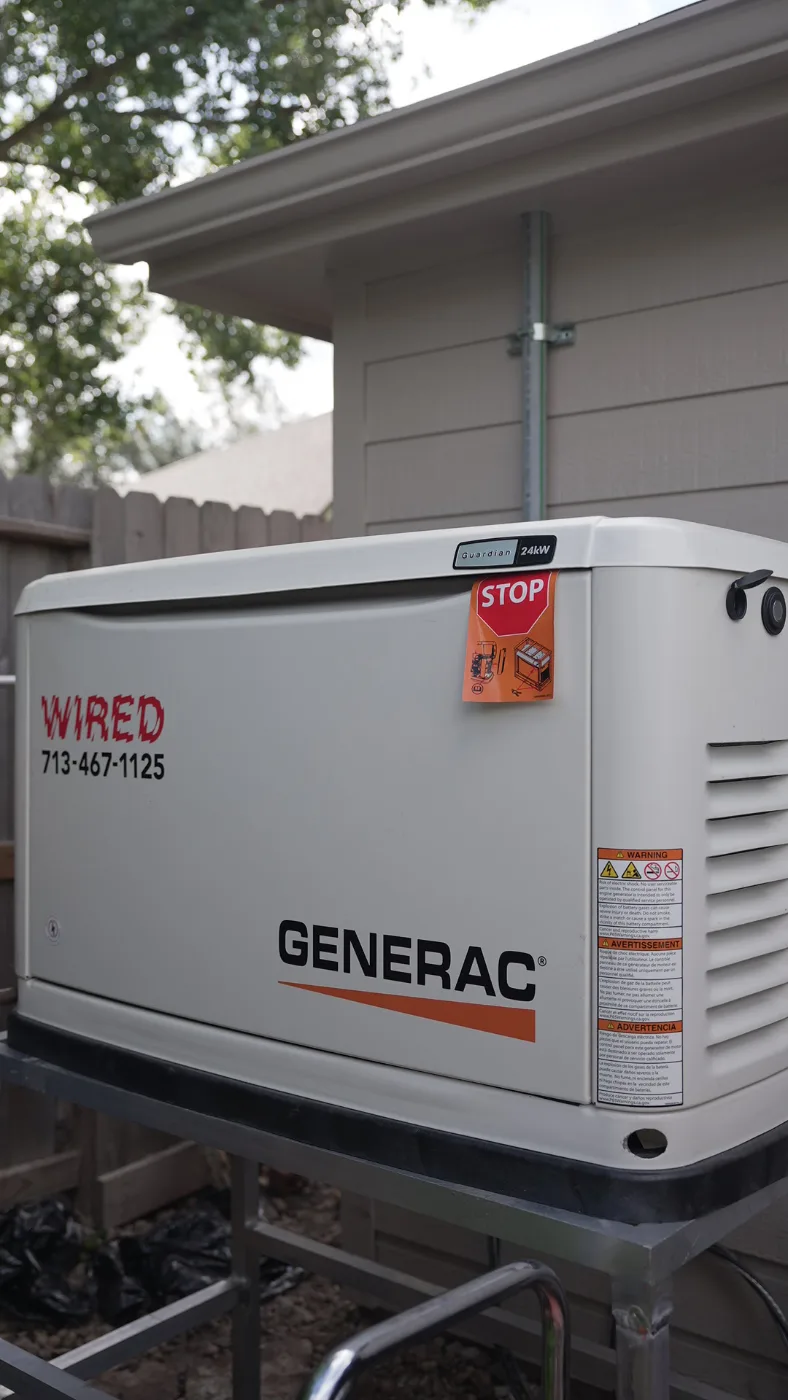
Generator installation
Sized off your panel, permitted by us, running in a day.
How we do it →
Lighting
Recessed, landscape, pool, and the fixture you've been meaning to hang.
How we do it →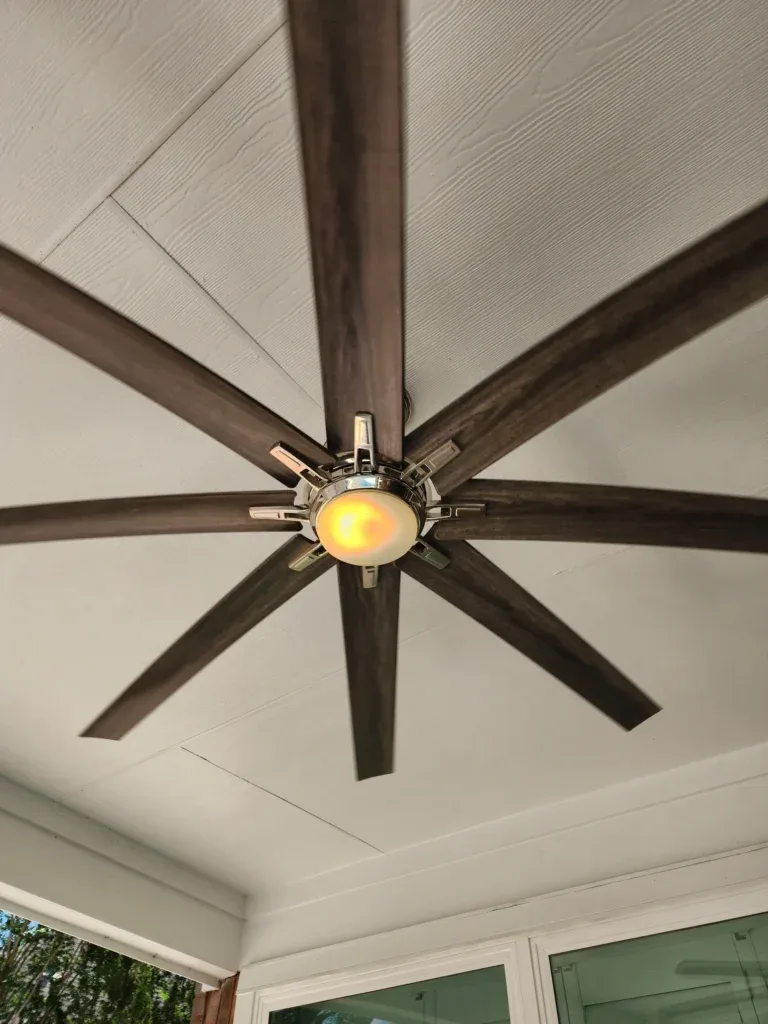
Ceiling fans
Hung right, balanced, and wired to the switch you want.
How we do it →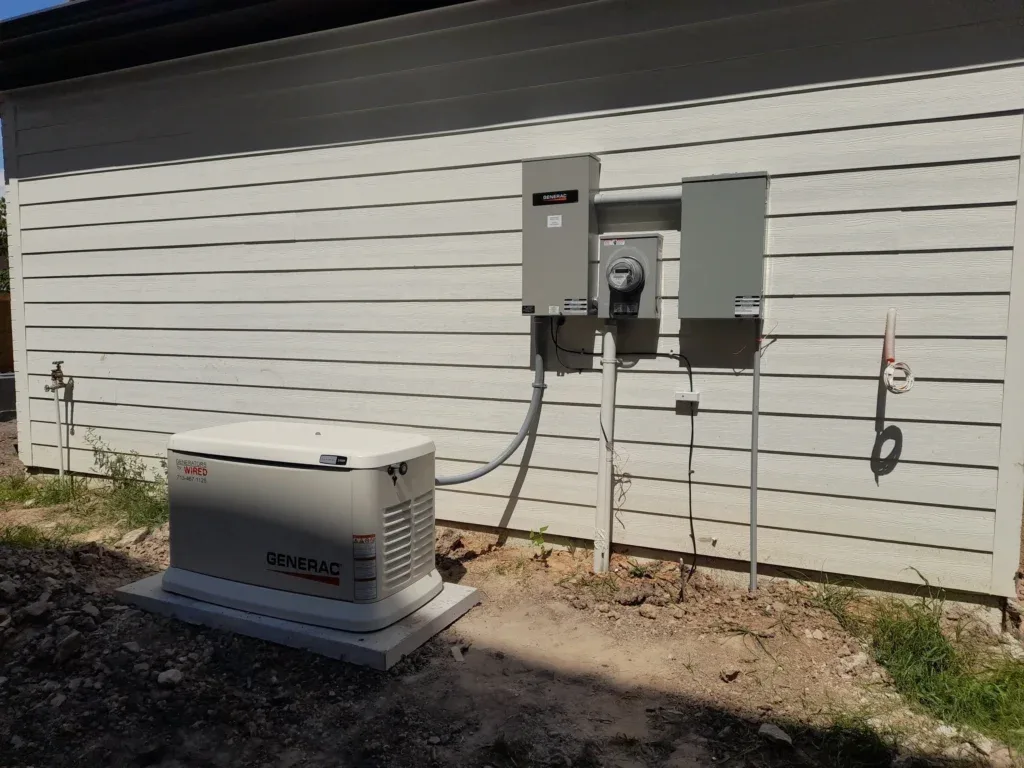
Electrical panels
Old panel, breakers that trip, no room for the EV charger? We replace it.
How we do it →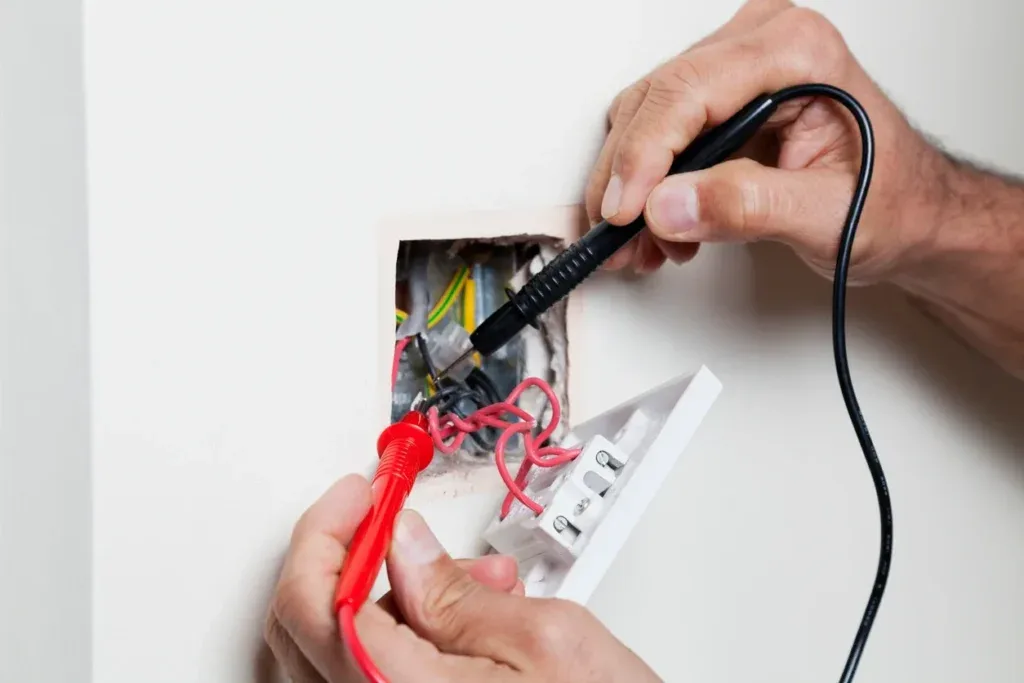
Emergency repairs
Sparking, buzzing, or smells hot? Call. We're up.
How we do it →
Outlets & wiring
New outlets, EV chargers, and wiring that's finally to code.
How we do it →Ask us anything. These come up most.
How do I know if my house needs rewiring?
Warning signs are two-prong outlets, cloth wire, aluminum wire, breakers that trip, scorched outlets and flickering lights. An electrical inspection tells you for sure.
Can I stay in the house?
Usually yes, if we do it room by room. We tell you when the power is off.
How long does it take to rewire a house?
It depends on the size of the house, how easy the walls are to reach and how much wiring is being replaced. A few circuits is a much shorter job than a whole house. Your written estimate includes the schedule and tells you when the power will be off.
How much does it cost to rewire a house?
It depends on the size and layout of the house, access through the attic and walls, what wiring is there now, whether the panel changes, and permit fees. Every house is different, so a free visit gets you a written estimate.
Is aluminum wiring dangerous?
Aluminum branch wiring is a known concern because its connections can loosen and overheat over time. It is not an emergency in every house, but it should be evaluated. We check the connections and explain your options, including replacing circuits with copper or repairing connections with parts rated for aluminum.
Does knob and tube wiring have to be replaced?
Knob and tube has no ground, its insulation ages poorly and many insurers ask about it, so check with your insurer on what they require. We generally recommend replacing it, and we show you what we find before recommending anything.
Can you rewire a house without tearing out walls?
In most homes, yes. We work through the attic, any crawl space and the existing outlet and switch openings. Some small access holes are usually needed, and we tell you where they will be and how patching is handled before we start.
Do I need to move out while the house is rewired?
Usually not. We work room by room and restore power to finished areas at the end of each day where we can. We tell you ahead of time if the whole house has to be off.
Should I rewire before selling my house?
Not always. A buyer's inspection may only flag a few circuits that can be repaired. If knob and tube or aluminum wiring comes up, a written plan and estimate from a licensed electrician helps both sides decide. We can inspect and give you one.
Not sure what is behind the walls?
A free inspection tells you.